I Switched to the Xodo Desktop Pdf Editor and Here is What Happened
Category: Electronics
Introduction
The decision to replace a long-standing PDF workflow with a different desktop editor is one many buyers face. Xodo Desktop Pdf Editor has attracted attention for its straightforward interface, strong annotation tools, and cross-platform availability. This article examines what happened when the reviewer migrated daily PDF tasks to Xodo Desktop. It presents an objective, third-person analysis designed to help readers who care about performance, annotation fidelity, collaboration, compatibility, and long-term maintenance.
The review covers real-world use cases such as academic note-taking, engineering markups on schematics, contract redlining, form filling and signing, and light editing for publishing. It also highlights what typical buyers prioritize — speed, reliability, privacy, and the ability to handle large documents without slowing down a laptop or workstation.
First Impressions and Installation
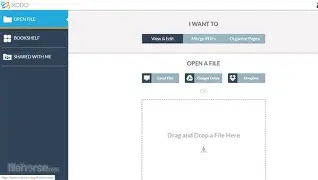
Xodo Desktop installs quickly on supported platforms and keeps a low profile during setup. The installer is compact compared with some enterprise PDF suites that bundle additional modules. After installation, the application launches into a clean interface with an emphasis on reading and annotation tools. Users who prioritize a minimal learning curve will find the layout approachable — main controls are visible, and essential tools are just one or two clicks away.
From the outset, the reviewer noted that Xodo starts faster than many full-featured commercial suites and consumes moderate system resources. For users on older laptops or Chromebooks with Linux compatibility layers, this performance characteristic is often decisive.
Interface and Usability
Xodo Desktop favors an unobtrusive UI. The document canvas sits at the center, with a toolbar for annotations and a sidebar for thumbnails, outlines, and attachments. The toolbar is context-aware — relevant tools appear when needed, and advanced options are accessible via menus rather than cluttering the main view. This approach benefits users who spend long hours reviewing documents because it reduces visual fatigue and keeps the workspace focused.
Keyboard shortcuts are present for common actions (zoom, page navigation, toggling pane visibility). The reviewer appreciated the balance between mouse-driven controls and keyboard accessibility. Drag-and-drop support for opening files, and quick switching between documents in a tabbed interface, improved workflow efficiency in multitasking scenarios.
Annotation and Markup
Annotation is where Xodo Desktop shines. The editor provides a broad set of tools: highlights, underlines, freehand drawing, shapes (rectangles, circles), text boxes, callouts, and a comment system. For academic and engineering users who annotate PDFs repeatedly, the pen and highlighter tools are responsive and support pressure-sensitive input on compatible styluses and tablets. Sticky notes and comments can be threaded, making it easier for teams to follow discussions embedded in a document.
Annotations are exported cleanly and preserved when documents are opened in other common readers. This interoperability is crucial for teams that use mixed toolchains — for instance, a legal team that prefers a commercial viewer while engineers use an open-source reader for quick markups.
Looking for the best Electronics deals on Amazon?
Browse Now →Editing Capabilities
Xodo Desktop provides basic editing functions: rearranging pages, merging or splitting documents, rotating, and cropping. For content-level edits — changing text, replacing images, or adjusting fonts inside the PDF body — the application is intentionally limited. This design decision favors lightweight performance over heavyweight editing functionality.
For users who need to correct a typo inside a PDF or replace a scanned graphic, a dedicated PDF editor with full content-editing features or a workflow that converts the document to the source file (e.g., Word, InDesign) remains necessary. That said, Xodo supports adding new text layers, which is sufficient for annotations, redactions via overlays, and filling gaps in scanned documents when precision editing is not required.
Form Filling, Signing, and Collaboration
Form filling is straightforward. The reviewer found Xodo able to handle interactive PDF forms and basic checkboxes, radio buttons, and text fields. Digital signing support exists for adding visible signatures and simple signature images; however, advanced certificate-based signing and enterprise-level signature workflows (with timestamping and certificate validation) are better handled with specialized software.
Collaboration features include the ability to save annotated versions and share PDFs via standard file systems or cloud storage. Xodo does not impose a proprietary cloud lock-in; users can open the same annotated file in other apps. For teams that need real-time co-editing with in-app sync, a collaboration-focused platform may be preferable, but for asynchronous review cycles (drafts, comment cycles, approvals), Xodo integrates cleanly with existing cloud storage providers.
Performance and Large Documents
When opening large technical manuals or schematics with hundreds of pages and heavy imagery, Xodo remained responsive. Page rendering is fast and smooth scrolling is maintained even during heavy annotation sessions. Memory usage rose predictably with document size but stayed within acceptable bounds for modern laptops.
For users working with extremely large scanned archives, Xodo handles paging and navigation efficiently, though the absence of integrated high-accuracy OCR (see Limitations) can hinder searchability across an archive without pre-processing.
Compatibility and File Support
Xodo supports common PDF standards and handles embedded fonts and metadata correctly in most cases. It opens PDFs generated by office suites, scanned documents, and technical outputs. Some advanced features of complex PDFs — forms with dynamic JavaScript, custom security handlers, or DRM-protected files — may not behave the same way as in enterprise PDF software. Typical buyers in education and engineering will rarely encounter these edge cases, but professionals in publishing or corporate compliance should verify compatibility with a sample of their files before replacing an entire workflow.
Privacy and Security
Buyers concerned about privacy will like that Xodo’s desktop app works with local files without requiring an account for core functionality. Documents remain on the user's machine unless explicitly uploaded to cloud storage. For sensitive documents, local-only workflows reduce exposure risk. For document signing and secure redaction, however, users should evaluate whether the tool meets regulatory and legal standards required in their industry.
Limitations and Missing Features
No application is perfect; Xodo Desktop has trade-offs that prospective buyers should consider:
Discover deals on Electronics — updated daily.
Browse Now →- Limited content editing: Not designed for deep PDF content edits like text reflow, font replacement, or complex page composition.
- OCR capabilities: Built-in OCR (if present) is basic compared to specialized OCR suites, so converting large scanned archives into searchable text may require external processing.
- Advanced security features: Enterprise-grade redaction and certificate-based signing may be limited or absent.
- No real-time multi-user editing: Collaboration is asynchronous; teams requiring simultaneous editing may need other tools.
Pros & Cons
Pros
- Fast and lightweight: Quick launches and efficient rendering for most PDFs.
- Excellent annotation tools: Responsive pen/highlighter support and robust comment threading.
- Clean, minimal interface: Low learning curve, good for users migrating from simpler readers.
- Local-first privacy: Works with local files and common cloud services without forcing account creation.
- Good interoperability: Annotations are preserved across multiple common PDF viewers.
Cons
- Limited advanced editing: Not a substitute for full-content PDF editors used in professional publishing.
- OCR and batch processing: Requires external tools for high-accuracy OCR or bulk conversions.
- Enterprise features: Lacks some advanced security and certificate workflows needed in regulated industries.
- No built-in real-time collaboration: Collaboration is file-based and asynchronous.
Comparison Table
| Feature | Xodo Desktop Pdf Editor | Typical Commercial Suite (e.g., Adobe Acrobat DC) | Lightweight Alternatives (e.g., Foxit Reader / Okular) |
|---|---|---|---|
| Primary Strength | Annotations and reading performance | Comprehensive editing, redaction, and enterprise features | Fast viewing and basic annotations |
| Content Editing (text/images) | Basic (text overlays) | Advanced (edit text/images in-place) | Limited to none |
| OCR | Basic or limited | Advanced, high-accuracy OCR | Varies; external tools often required |
| Collaboration | Asynchronous file-based | Advanced review workflows, comments, and syncing | Mostly asynchronous |
| Signing & Compliance | Visible signatures supported; limited enterprise signing | Certificate-based signing, compliance, and legal workflows | Basic signing, limited compliance |
| Performance on Large Files | Strong — responsive rendering | Good but can be resource-heavy | Good for viewing; annotation performance varies |
| Price Model | Free or freemium model for core features | Subscription / licensed product | Free or low-cost tiers |
Real-World Use Cases
Academic Note-Taking
Students who annotate lecture slides and journal articles benefit from Xodo's fast highlight tools, pen input, and ability to organize annotated files in folders. For study sessions using a tablet and stylus, responsive pen handling preserves the feel of handwriting, and the simple export of annotated PDFs makes sharing with classmates straightforward.
Engineering and Technical Markups
Engineers marking up schematics and CAD exports like PDF prints appreciate that Xodo preserves vector fidelity when zoomed. The ability to layer callouts and measurements on top of drawings without altering the base file is useful for review cycles. However, precise dimensioning and CAD-aware features remain within specialized tools.
Legal and Contract Review
Legal professionals conducting contract reviews can use Xodo for redlining and threaded comments during negotiation rounds. The reviewer found it effective for asynchronous review, but for final redaction and certified signing, a tool that supports tamper-proof redaction and advanced signature validation may be required.
Small Business and Administrative Workflows
Small offices that need reliable form filling, scanning, and lightweight document assembly will find Xodo meets most needs. The app speeds up day-to-day tasks like populating forms and stamping approvals, reducing dependence on print-scan cycles.
Buying Guide: Who Should Consider Xodo Desktop
When evaluating PDF tools, buyers should prioritize a set of features that match their regular tasks. The following checklist will help decide whether Xodo Desktop is appropriate.
Consider Xodo Desktop if:
- The primary need is reading and annotating PDFs rather than editing content inside PDFs.
- Users require fast performance on modest hardware.
- Local file privacy is important and cloud-only solutions are undesirable.
- Teams operate mainly asynchronously and exchange annotated files through existing cloud storage.
- Stylus support for handwritten annotations is a regular requirement.
Consider other options if:
- In-place PDF content editing (text, image replacement) is a frequent need.
- Enterprise signing, certified redaction, or legally-admissible timestamping is mandatory.
- Real-time co-authoring and integrated review platforms are required.
- High-volume OCR with batch processing for large archives is a priority.
Checklist Before Switching
- Test Xodo with sample documents from your workflows, including large files and forms.
- Verify that annotations made in Xodo are visible and editable in the other readers your organization uses.
- Confirm platform compatibility for all team members (Windows, macOS, Linux flavors).
- Evaluate whether integrated OCR or external OCR steps are needed for your archive.
- Assess signing and redaction needs against compliance requirements and legal standards.
Tips for Getting the Most from Xodo Desktop
- Customize the annotation palette with frequently used colors and pen styles to speed repetitive tasks.
- Use document thumbnails and bookmarks to navigate long reports quickly.
- For scanned paper workflows, pre-process with a high-quality OCR tool if searchability is required across many files.
- Back up annotated files regularly if they are part of a formal review process to ensure version history is retained.
- Combine Xodo with a dedicated editing application when deep content changes are needed — use the right tool for each stage.
Conclusion
Xodo Desktop Pdf Editor works well as a modern, lightweight PDF reader and annotation tool for a broad set of real-world tasks. It is especially strong for students, engineers, and small teams that value speed, a minimal learning curve, and local-first privacy. The trade-offs are clear: Xodo is not intended to replace heavyweight PDF composition suites or enterprise compliance tools that demand certified redaction and advanced signature workflows.
For buyers who need a responsive annotation environment and reliable reading performance without the overhead of subscription licensing, Xodo Desktop is a sensible choice. For organizations with specialized security, legal, or publishing needs, a hybrid workflow that uses Xodo for everyday reviews and a dedicated editor for finalization will often provide the best balance of efficiency and capability.