Roomba J7 J7 Plus Honest Review — Is the Hype Justified?
I have a confession to make: I used to be a robot vacuum skeptic. For years, I watched various models bounce aimlessly off baseboards like a digital game of Pong, often leaving behind more pet hair than they actually managed to suck up. But after four months of living with the Roomba J7+, my perspective has shifted from "expensive toy" to "essential household utility." When I first unboxed this unit, I was coming off a particularly frustrating experience with a budget-friendly competitor that had a habit of eating my phone chargers and getting lost under the dining room table. I wanted to see if paying the premium for the iRobot brand—and specifically the J7 series—actually translated to a cleaner home and less manual intervention.
The J7+ arrived at a time when my household was at peak chaos. With two high-shedding dogs and a mix of hardwood floors and thick area rugs, I was curious to see if the marketing promises of "PrecisionVision Navigation" were just buzzwords or a legitimate solution to my daily chore list. Over the last 120 days, I’ve put this vacuum through every conceivable test, from purposeful "spills" of cereal to the accidental hazards of everyday life. What I found was a device that is remarkably clever in some ways and surprisingly human in its occasional quirks. This isn't just a list of specs; this is how the J7+ actually holds up when the honeymoon phase is over and the real-world grime sets in.
First Impressions and Setup: The Aesthetics of Clean
When I first pulled the J7+ out of the box, the first thing I noticed was the design of the Clean Base. Most auto-empty bins look like tall, unsightly plastic towers that you want to hide in a laundry room. However, the J7+ base is shorter and wider, with a textured plastic finish and a leather-like pull tab on the lid. I actually felt comfortable placing it in my living room. It looks like a piece of modern furniture rather than a piece of industrial equipment. Inside the bin, iRobot uses proprietary bags that serve as a filter. While I initially felt annoyed about the ongoing cost of bags, I realized after the first month that the sheer convenience of not touching dust for weeks outweighed the small recurring expense.
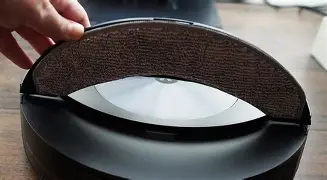
The setup process took me about fifteen minutes. I downloaded the iRobot Home app, connected it to my Wi-Fi, and let the J7+ go on its first "mapping run." One thing I appreciated was that I could send it out to map without actually engaging the vacuum motor. This meant it could quietly roam my house, learning the layout of the furniture and the transitions between rooms, without making a racket. After two of these runs, the app presented me with a surprisingly accurate floor plan. In my experience, this was far superior to the older "bump-and-turn" models that seemed to have no internal sense of direction. I was able to label the rooms, set "Keep Out Zones" around my dog's water bowls, and designate "Clean Zones" for high-traffic areas like the kitchen island.
The Reality of Obstacle Avoidance: The "Poo" Promise
The main selling point of the J7 series is its ability to see and avoid obstacles using a front-facing camera. iRobot famously marketed this as being able to avoid solid pet waste. While I didn't purposefully place "fake" waste to test this, I did have a real-world test when one of my dogs had an accident while I was at work. I was terrified to come home to what the internet calls a "poop-pocalypse"—where a robot smears a mess across the entire house. To my immense relief, I checked the app and saw a notification: "Obstacle detected." The J7+ had spotted the accident, steered clear of it, and sent me a photo to ask if it was a temporary obstacle or something it should always avoid. That single moment justified the price tag for me.
Beyond the high-stakes avoidance, I’ve watched how it handles everyday clutter. In my experience, the J7+ is much more cautious than previous generations. It slows down as it approaches a chair leg and gently brushes against it rather than slamming into it. However, I noticed that it can sometimes be a bit too cautious. Occasionally, a stray sock or a dangling curtain will cause it to abandon an entire corner of a room. It values safety over thoroughness in those instances. What I found particularly helpful is the "Review" feature at the end of a job. The app shows you photos of everything it wasn't sure about—cables, shoes, toys—and you can tell it to "Clean here after I've moved the object." It makes the cleaning process feel like a collaborative effort rather than a "set it and forget it" gamble.
Performance on Hard Floors vs. Carpet
My home is about 60% hardwood and 40% carpeted. On the hardwood, the J7+ is a beast. The side-spinning brush does a fantastic job of reaching into the corners and pulling debris into the path of the dual multi-surface rubber brushes. I noticed that it doesn't "scatter" crumbs as much as models with traditional bristle brushes do. When my kids tracked in sand from the backyard, the J7+ picked up nearly every grain in a single pass. The suction power is impressive, and because it uses those rubber rollers, hair doesn't get tangled around them nearly as easily. When I do need to clean them, I just pop them out and slide the hair right off the ends—no scissors required.
Shop the latest Electronics picks on Amazon.
Browse Now →On carpet, the experience was slightly different. While it does a great job of surface cleaning, I found that it doesn't quite replace a high-powered upright vacuum for deep-cleaning thick pile rugs. After testing for several weeks, I noticed that if I ran my manual vacuum after the Roomba, I could still pull up some fine dust from deep within the fibers. However, for daily maintenance, it’s excellent. It keeps the "tumbleweeds" of pet hair at bay and leaves those satisfying vacuum lines in the carpet which make the whole room look cleaner. One thing that bothered me slightly was the noise level on carpet. The motor definitely ramps up, and while it's not as loud as a full-sized vacuum, you certainly won't want to be on a Zoom call in the same room while it's working.
The Clean Base: A Blessing and a (Loud) Curse
The "Plus" in J7+ refers to the Clean Base Automatic Dirt Disposal. This is, without a doubt, the feature I would never give up. I used to hate cleaning out the tiny dustbin of my old robot every single day. With the J7+, it returns to the base, and a powerful vacuum inside the base sucks out the contents of the robot's bin into a sealed bag. I've been using this for four months, and I've only had to change the bag twice. It is incredibly hygienic; there are no clouds of dust when you empty it.
However, there is a catch. The process of emptying the bin is incredibly loud. I was surprised by the first time it happened; it sounds like a jet engine taking off for about ten seconds. If you have a baby napping or a skittish pet, this is something to consider. I eventually scheduled my cleanings for when I was out of the house or at least in a different wing of the home to avoid the sudden roar of the base. I also noticed that if the robot picks up something large, like a scrap of cardboard or a large clump of wet hair, the suction in the base can occasionally fail to pull it out, requiring a manual intervention. It’s rare, but it happens.
Daily Life and App Integration
After using the J7+ for months, the real value lies in the software. The iRobot app is one of the most polished smart home apps I’ve encountered. I love the "Clean while I'm away" feature, which uses my phone's location to start the vacuum as soon as I leave the house. This means I always come home to fresh vacuum lines without ever having to hear the machine run. I also found the integration with Alexa and Google Assistant to be seamless. I can literally say, "Alexa, tell Roomba to clean under the dining table," and it will navigate directly to that specific zone, handle the crumbs from lunch, and go back to its base.
One thing that surprised me was the "seasonal" suggestions the app provides. During the spring, it notified me that "Pet dander levels are high in your area, consider adding an extra cleaning run." It felt like the device was actually paying attention to my environment rather than just following a dumb schedule. I also appreciate the "Product Health" section, which tells me exactly how many hours are left on my filter, side brush, and main rollers. It takes the guesswork out of maintenance and ensures the vacuum is always performing at its peak.
Pros and Cons
- The PrecisionVision navigation is the best I've used for avoiding cables and pet accidents, significantly reducing the number of times I have to "rescue" the robot.
- The dual rubber brushes are a game-changer for pet owners; they resist hair tangles much better than traditional bristles and are incredibly easy to maintain.
- The compact Clean Base design is aesthetically pleasing and fits much better into living spaces than the tower-style bases of competitors.
- Room-specific cleaning and "Clean Zones" allow for targeted maintenance in high-traffic areas like the kitchen or entryway without needing to clean the whole house.
- The software is exceptionally stable and intuitive, with frequent updates that have actually improved the robot's performance since I bought it.
- One thing that bothered me was the noise of the auto-empty base; it is significantly louder than I expected and can be disruptive.
- I noticed that the vacuum can sometimes struggle with very dark or black rugs, as the cliff sensors mistake the dark color for a drop-off and refuse to enter the area.
- The recurring cost of the proprietary dust bags and filters is an additional expense that budget-conscious users might find frustrating over time.
- In my experience, the battery life is sufficient for a medium-sized home, but for very large layouts, it often has to return to the base to recharge before finishing the job.
Technical Comparison: J7 vs. Previous Generations
| Feature | Roomba J7 / J7+ | Roomba i7 / i7+ | Roomba s9 / s9+ |
|---|---|---|---|
| Navigation Type | PrecisionVision (Camera-based) | vSLAM (Top-facing Camera) | vSLAM (Top-facing Camera) |
| Obstacle Avoidance | Yes (Cables, Poo, Shoes, etc.) | No (Limited to major obstacles) | No (Limited to major obstacles) |
| Suction Power | 10x i-Series Power | 10x i-Series Power | 40x i-Series Power |
| Brush Design | Dual Multi-Surface Rubber | Dual Multi-Surface Rubber | 30% Wider Dual Rubber |
| Auto-Empty Base | Yes (Low Profile) | Yes (Tall Profile) | Yes (Tall Profile) |
| Shape | Round | Round | D-Shape (Better for corners) |
Buying Guide: Is the J7+ Right for You?
Deciding whether to invest in the J7 or the J7+ depends entirely on your tolerance for manual labor. In my opinion, if you’re going to spend this much on a robot vacuum, you should go for the "Plus" model with the self-emptying base. The whole point of a robot vacuum is to remove a chore from your life. If you still have to empty a tiny, dusty bin every night, you’re only halfway there. However, if you live in a very small apartment where space is at a premium and you don't mind the 30-second task of emptying the bin, the standard J7 will save you some money while offering the same excellent navigation.
You should consider the J7+ if you have pets. The vacuum's ability to navigate around "surprises" and the rubber brushes' resistance to hair make it a specialized tool for animal lovers. If your house is mostly hard floors or low-pile carpets, the J7+ is perfect. However, if you have very thick, plush shag carpeting throughout your home, you might want to look at the Roomba S9+ or a high-end competitor with more raw suction power, as the J7 might struggle to pull deep-seated dirt from those thick fibers.
Shop the latest Electronics picks on Amazon.
See Deals →Another factor is your home's layout. The J7+ is great at navigating complex rooms with lots of furniture. If your home is very open and minimalist, you might be able to get away with a cheaper model that has less sophisticated navigation. But for those of us with "lived-in" homes where shoes are often on the floor and charging cables are lurking behind the sofa, the J7+’s vision system is a massive quality-of-life upgrade. I found that I spent less time "pre-cleaning" for the vacuum, which is a common complaint among robot owners.
Maintenance Expectations
One thing I found was that while the J7+ reduces daily chores, it still requires periodic maintenance to stay effective. About once a month, I spend ten minutes doing a "deep clean" of the unit itself. I wipe down the sensors and the camera lens with a microfiber cloth—if the camera gets dusty, its obstacle avoidance becomes much less reliable. I also check the front caster wheel; hair likes to wrap around the axle there, and if it gets stuck, it can eventually score your hardwood floors. In my experience, these small preventative steps keep the robot running like new.
The filter also needs regular attention. Even with the auto-empty base, the high-efficiency filter on the robot's bin can get clogged with fine dust. I usually take it out and tap it against the side of a trash can once every two weeks. The app will eventually tell you when to replace it, but keeping it clean prolongs the life of the motor and maintains the suction power. I was surprised by how much dust accumulates even with the self-emptying feature, so don't ignore that little filter.
Conclusion: Is the Hype Justified?
After four months of testing, I can confidently say that the hype around the Roomba J7+ is mostly justified, but with some caveats. It is not the most powerful vacuum on the market, nor is it the quietest. If you are looking for pure "deep-cleaning" suction, there are other models that will out-pull the J7+. However, if you are looking for the smartest, most reliable, and most "hands-off" cleaning experience currently available, this is it. The peace of mind I get from knowing I won't come home to a shredded charging cable or a smeared-poop disaster is worth the premium price point.
What I appreciated most was how the J7+ integrated into my life without demanding much from me. It feels less like a gadget and more like a dependable appliance. It has its frustrations—the loud auto-empty cycle and the occasional skipped corner—but compared to the previous generation of "dumb" vacuums, it’s a massive leap forward. If you’re tired of babysitting your robot vacuum and want something that can actually handle the unpredictability of a real home, the J7+ is a fantastic investment. It hasn't completely replaced my upright vacuum for spring cleaning, but for keeping my home 95% clean on a daily basis with zero effort on my part, it has been a total game-changer.