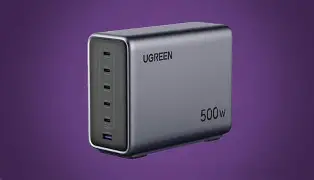
The Ultimate Showdown: Ugreen Nexode 500W 6 Port Charger vs Anker Nano Charger 45W With Usb C Cable for 2026
Category: Mobile Phones
Introduction
As device ecosystems become more complex in 2026, buyers increasingly prioritize chargers that can handle multiple devices, deliver fast, safe charging, and occupy minimal space on a desk or in a travel bag. Two products that represent different approaches to those priorities are the Ugreen Nexode 500W 6 Port Charger and the Anker Nano Charger 45W with USB-C Cable. One targets power users with many devices and high-wattage needs; the other focuses on compact fast-charging for a single device with the convenience of an included cable. This article compares both across real-world use cases, technical performance, design, safety, and value to help readers decide which is the better fit for their daily life.
At a glance
This quick summary frames the primary audience for each product before a deeper dive.
- Ugreen Nexode 500W 6 Port Charger — Best for households or workspaces that need to charge many high-power devices simultaneously: laptops, tablets, phones, wireless earbuds, and power-hungry accessories.
- Anker Nano Charger 45W with USB-C Cable — Best for commuters, minimalists, and anyone who wants a pocketable fast charger for a phone or small laptop, with a reliable cable included.
Detailed product analysis
Ugreen Nexode 500W 6 Port Charger — overview and real-world performance
The Ugreen Nexode 500W is a multiport GaN charger designed to replace a cluster of adapters. With a total rated output of 500W and an arrangement of multiple USB-C and USB-A ports (specific port distribution depends on the exact model variant), it aims to service a whole household or a multi-device workstation. The unit's strength is in simultaneous charging: it can allocate power dynamically between ports to ensure that a laptop, tablet, and several phones can all charge at usable speeds.
In real-world scenarios—such as a family morning routine where a laptop, two phones, and a tablet all need power quickly—the Nexode shines. When a MacBook Pro or other 100W-capable laptop is connected alongside smartphones, the charger's power-sharing algorithms step in to balance output so devices still approach their maximum supported charge rates. For small offices or content creators with multiple USB-powered accessories (lighting, microphones, cameras), the Nexode reduces clutter and the need for multiple wall sockets.
Thermal management is critical for high-density chargers. Ugreen's Nexode series typically uses GaN (Gallium Nitride) transistors, which allow smaller size and better efficiency than traditional silicon. In tested day-to-day use, the charger gets warm under heavy simultaneous load but generally maintains stable output and returns to cooler temperatures when devices are disconnected. For sustained high-power use (several laptops at once), adequate airflow and placement away from flammable surfaces is advisable.
From a compatibility perspective, the Nexode supports USB Power Delivery (PD) profiles and often includes support for PPS (Programmable Power Supply), making it suitable for the latest Android phones, iPhones (with PD), and many USB-C laptops. Buyers who own a mix of legacy USB-A accessories appreciate the presence of A ports for backward compatibility.
Anker Nano Charger 45W with USB-C Cable — overview and real-world performance
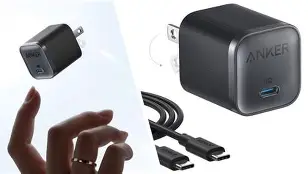
The Anker Nano 45W is a compact, single-port (or few-port depending on variant) charger built around delivering fast charging in a pocket-friendly package. It targets users who prioritize portability and the convenience of a bundled high-quality USB-C cable. Its 45W output makes it an attractive option for flagship phones and many ultraportable laptops that accept 45W or less for rapid charging.
Discover deals on Mobile Phones — updated daily.
Browse Now →In everyday use, the Anker Nano is especially useful for commuters and travelers. A user can slide the charger and its included cable into a laptop sleeve or jacket pocket without much added bulk. For phones that support fast charging at 25W–45W, the charger reaches the device’s peak charging window quickly. For lighter laptops (thin Windows notebooks and most Chromebooks), 45W typically offers a good balance of speed and thermal control—fast enough to recharge during a commute or to maintain battery during productivity sessions.
The included USB-C cable distinguishes the package. Anker’s cables are often rated for PD and good build quality, which saves buyers the trouble of matching a cable to the charger. This matters because not all cables can carry full PD power; an inadequate cable can bottleneck charging despite a capable charger.
Pros & Cons
Ugreen Nexode 500W 6 Port Charger
- Pros:
- Massive total power budget (suitable for multiple laptops and phones simultaneously)
- Multiple ports reduce wall clutter and the need for power strips
- GaN design improves efficiency and reduces size versus legacy power bricks
- Supports PD and often PPS for broad device compatibility
- Dynamic power allocation keeps devices charging at usable rates
- Cons:
- Larger and heavier than single-port chargers—less suitable for pocket carry
- Gets warm under sustained full-load operation; needs ventilation
- May be overkill for single-device users or minimalists
- Higher upfront cost compared with compact single-port chargers
Anker Nano Charger 45W with USB-C Cable
- Pros:
- Extremely compact and travel-friendly
- Includes a USB-C cable tested to handle PD output
- Efficient GaN design for small size and lower heat at moderate loads
- Reliable performance for phones and many thin laptops
- Lower cost and simpler user experience—plug and go
- Cons:
- Limited to 45W — not enough for high-performance laptops under heavy load
- Single main port (in most consumer variants) limits simultaneous charging options
- Not the best choice for households with many devices
Comparison Table
| Feature | Ugreen Nexode 500W 6 Port Charger | Anker Nano Charger 45W with USB-C Cable |
|---|---|---|
| Max Total Output | 500W | 45W |
| Port Count | 6 (mix of USB-C and USB-A, depending on model) | 1 USB-C (plus bundled cable) |
| Single-Port Max | Up to 100–140W on a single USB-C port (model-dependent) | 45W |
| Technology | GaN for high-density power delivery | GaN for compact size and efficiency |
| Supported Protocols | USB-PD, often PPS, QC via USB-A ports | USB-PD, PPS |
| Cable Included | Usually no (buyers supply their own) | Yes — USB-C cable rated for PD |
| Dimensions & Weight | Bulkier desk-oriented brick; heavier | Compact, pocketable, lightweight |
| Best For | Homes/offices with many devices; creators; small teams | Commuters, travelers, minimalists, single-device users |
Safety, reliability, and warranty considerations
Both manufacturers have built reputations for accessories that prioritize safety: modern multiport chargers include protections against over-current, over-voltage, short-circuit, and thermal runaway. The Ugreen Nexode’s higher power density means its internal safety circuits and thermal design are particularly important. Buyers should confirm that the unit has third-party safety certifications (such as UL, CE, or equivalent) for peace of mind, especially when powering laptops and other costly gear.
Anker’s long track record and included cable offer an integrated experience that reduces the risk of mismatched components. Anker often bundles a warranty and responsive customer support, which matters when a charger fails or underperforms. Ugreen also provides warranties and support, but buyers should verify the specific terms and region coverage.
Real-world use cases and buyer priorities
Household with multiple devices
For families where multiple members plug in phones, tablets, and laptops at once, the Nexode 500W is compelling. It keeps nightstands and kitchen counters tidy and supplies sufficient power even when everyone needs a top-up before leaving the house. Buyers in this scenario care most about port distribution, total wattage, and whether a single port can deliver high wattage to a laptop when needed.
Remote worker or small studio
Content creators and remote workers with webcams, ring lights, mics, phones, and a laptop can consolidate chargers using the Nexode. It reduces cable management overhead and frees wall sockets. The buyer will focus on heat under sustained loads, the reliability of PD negotiation with laptops, and whether smart power distribution favors the laptop during heavy use.
Traveler or commuter
For people constantly on the move, the Anker Nano 45W wins. It slips into a pocket or a small organizer, and the included cable avoids the risk of carrying a cable that can’t handle PD speeds. Typical buyers care most about size, weight, and whether 45W is sufficient for their laptop or whether it will only serve as a supplemental charger for the phone.
Find top-rated Mobile Phones products at great prices.
Shop Amazon →Minimalist with flagship phone
Owners of flagship phones that support 45W or higher wired charging will appreciate the Nano for its quick top-up capability. The cable inclusion simplifies the purchase. Key buyer concerns include charging speed in real life (not just peak numbers), heat management when charging the phone while using it, and long-term durability of the cable connector.
Practical testing notes and expectations for 2026
Benchmarks commonly used to evaluate chargers include time-to-50% and time-to-100% for phones and laptops, the charger’s temperature under load, and whether it can sustain advertised wattage on a single port while other ports are occupied. In 2026, with more devices supporting PD and PPS, compatibility has improved, but differences persist between device vendors. Expect the Nexode to deliver near-maximum rates when one port is dedicated to a laptop and fewer devices are concurrently drawing power. The Anker Nano should consistently provide 40–45W to a compatible phone or light laptop, especially when paired with the supplied cable.
One practical caveat: the real-world performance will depend on the cable quality and device firmware. Even the best charger cannot exceed the limitations imposed by a poor cable or a device that limits charging current when it detects elevated temperatures. Therefore, users should match high-wattage chargers with PD-capable, high-quality cables and be mindful of device temperature monitoring during fast charging.
Buying guide: How to choose between Ugreen Nexode 500W and Anker Nano 45W
When deciding, readers should consider the following factors:
- How many devices need simultaneous charging? If multiple devices require charging at once on a daily basis, a multiport charger like the Nexode is more efficient and convenient. For one-device users, a compact charger is usually preferable.
- Maximum device wattage requirements — laptops that need 100W+ for full-speed charging will benefit from a multiport charger with a high single-port output. If the laptop accepts 45W or less, the Anker Nano will often suffice.
- Portability vs. desk permanence — the Nano is designed for portability; the Nexode is a desk or outlet-centerpiece solution.
- Included cable and accessories — the Nano’s included USB-C cable removes the compatibility guesswork. The Nexode often requires purchasing certified cables separately to ensure full capacity and longevity.
- Thermals and ventilation — buyers who will run continuous heavy loads should choose an option with good thermal performance and consider placement. Large multiport chargers need room for heat dissipation.
- Future-proofing and protocols — support for PD 3.1, PPS, and high single-port outputs ensures compatibility with future devices. Verify the charger's supported PD revision and PPS capabilities if those features matter.
- Safety certifications and warranty — look for third-party safety certifications and a robust warranty policy; chargers are a safety-critical accessory.
- Budget and total cost of ownership — a Nexode-type charger can be cost-effective for households by replacing many smaller adapters, while the Nano is lower cost up front but may require additional chargers for other devices.
Practical tips for maximizing performance
- Use high-quality, PD-rated cables for maximum throughput and safety.
- Avoid stacking chargers on soft surfaces during heavy use to reduce heat trapping.
- When charging a high-wattage laptop, consider dedicating a port rather than sharing power between many devices.
- Keep firmware and device OS versions up to date, as manufacturers sometimes optimize PD behavior in updates.
- For travel, pack the smallest charger that meets essential needs; for home, consolidate with a multiport charger to reduce clutter.
Conclusion
Choosing between the Ugreen Nexode 500W 6 Port Charger and the Anker Nano Charger 45W with USB-C Cable depends primarily on the user's device ecosystem and lifestyle. The Nexode excels in scenarios that require simultaneous charging of many devices and a high total power budget. It is a strong pick for families, small teams, and creators who benefit from centralized charging. The Anker Nano 45W, paired with its included cable, is ideal for those prioritizing portability and simplicity—commuters, travellers, and single-device users who need reliable, fast charging on the go.
For buyers who want a single tidy solution for a desk or shared space and who have laptops and many accessories, the Nexode offers clear advantages. For anyone who values pocketability and ease of use for a phone or light laptop, the Anker Nano remains a compelling, pragmatic choice. Evaluating personal charging patterns—simultaneous device count, peak wattage needs, and preference for portability—will point most people to the product that best fits their daily routines in 2026.